Parrots Mimicking Speech: Do They Really Understand What They're Saying?

Sep 10, 2025 By

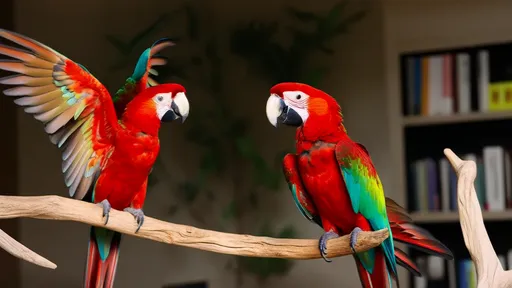
For centuries, the uncanny ability of parrots to mimic human speech has captivated and mystified us. From pirate tales to pet shops, these colorful birds have long been associated with the playful, if somewhat mindless, repetition of words and phrases. The classic image is of a bird squawking "Polly wants a cracker!" with no deeper comprehension of the request. This has led to the common perception that parrots are mere feathered recording devices, brilliantly programmed for sound but devoid of understanding. The phrase "parroting" itself has entered our lexicon as a synonym for mindless repetition. But is this centuries-old assumption actually true? A growing body of scientific research suggests we have profoundly underestimated the avian brain, forcing us to re-examine the age-old question: Do parrots truly understand what they are saying?


The journey into the parrot's mind begins with understanding the mechanics behind their mimicry. Unlike the human larynx, parrots produce sound using a syrinx, a complex organ located at the base of their trachea where the bronchi divide. This biological instrument grants them astonishing control, allowing them to replicate a vast array of sounds from the ring of a telephone to the subtle nuances of a human voice. Mimicry is a natural behavior in the wild, crucial for social bonding and integration into the flock. A parrot learns its flock's contact calls, essentially learning its native "language" to identify itself as part of the group. When a parrot is brought into a human home, we become its flock. In its effort to bond, it applies this innate talent to learning our sounds—our words, our laughs, our coughs. The initial motivation is social integration, not necessarily communication of ideas. This is where the "mindless repetition" theory finds its footing.


However, to stop there would be a grave oversimplification. The groundbreaking work of Dr. Irene Pepperberg with an African Grey parrot named Alex shattered the simplistic view of avian cognition. Alex didn't just mimic; he demonstrated a cognitive ability once thought to be the exclusive domain of primates and dolphins. Through decades of rigorous training, Alex learned to identify objects, colors, shapes, and materials. He could comprehend concepts like "same" and "different," and even express desires such as wanting to go to a different room. When shown a tray of objects, he could correctly answer questions like, "How many blue wooden blocks?" This wasn't mimicry; it was evidence of complex information processing. He used English words as true labels for concepts in his mind. His most poignant moment, now famous, came when he looked at his own reflection and asked, "What color?" Upon being told "grey" multiple times, he learned the word. From then on, he correctly identified the color grey, demonstrating not just learning but self-awareness. Alex proved that the hardware for understanding—the brain—was absolutely present.


The secret to this capacity lies in the unique structure of the parrot brain. For a long time, bird brains were dismissed as simple and primitive. Scientists now know this is a catastrophic error. While they do not have a neocortex like mammals, parrots possess a different brain structure called the pallium, which has evolved to have a similar neuron density and connectivity. Crucially, parrots have large brains for their body size, and their brains are organized in a way that facilitates complex information processing and problem-solving. These neural pathways allow for advanced cognitive functions, including memory, attention, and perhaps even a form of consciousness. This neurological hardware provides the biological foundation for not just mimicking sounds, but for attaching meaning to them. It transforms the act of speaking from a party trick into a potential tool for two-way communication.


Observations from parrot owners provide a wealth of anecdotal evidence that supports the scientific findings. Many owners report instances that strongly suggest contextual understanding. A parrot might learn to say "hello" only when someone enters the room, or "goodnight" when the lights are dimmed. Some learn to associate specific words with specific actions or objects, asking for "water" when their bowl is empty or saying "apple" when they see one. There are countless stories of parrots combining words in novel ways to describe new situations, a key indicator of linguistic comprehension. For example, upon seeing a first-time offering of a blueberry, a parrot might say "blue grape," applying known labels to a new object. This ability to generalize and innovate with language moves far beyond simple stimulus-response conditioning and hints at a genuine grasp of semantics.


Yet, it is crucial to maintain a balanced perspective. The line between comprehension and conditioned response can often be blurry. Behaviorist theory explains that a parrot can learn that saying "cracker" results in receiving a treat. This positive reinforcement strengthens the association between the word and the outcome without the bird necessarily understanding the word "cracker" as a concept for a baked good. It simply knows that producing that specific sound has a desirable effect. Much of a parrot's speech likely exists on this spectrum, a mix of true understanding and learned associations. Their intelligence is not human intelligence; it is different. They may understand the functional use of a word—"cracker" gets food—without pondering the abstract nature of hunger or baking. Attributing human-like motives and a full human understanding of language to them is a form of anthropomorphism that the science does not fully support.


So, do they understand? The answer is not a simple yes or no. It exists in a fascinating grey area. Parrots are undoubtedly capable of more than mindless repetition. The research is clear: they can learn to associate words with objects, actions, and concepts. They can use words intentionally to achieve goals, express needs, and even ask questions. They possess the neurological complexity for advanced cognitive processing. However, their understanding is likely not identical to our own. They probably do not ruminate on poetry or grasp the philosophical nuances of the words they use. Instead, they exhibit a pragmatic, functional understanding of language. They know that certain sounds, in certain contexts, create certain results and facilitate social connection. They understand that words have power.


In the end, the phenomenon of parrot speech is a profound reminder of the complexity of the animal mind. These vibrant creatures are not feathered tape recorders but sophisticated beings with a unique intelligence that allows them to bridge the communicative gap between species. They challenge our definitions of language and understanding, forcing us to expand our perspective. The next time a parrot says "Hello," it may not understand the word in the way you do, but it may very well understand that it is a sound used for greeting a member of its flock. And in that moment, a genuine, cross-species connection is made, proving that communication, in all its forms, is about far more than just the words themselves.


Recommend Posts
Animal

Deciphering the Various Sounds of Guinea Pigs: From Purring to Whistling

By /Sep 10, 2025

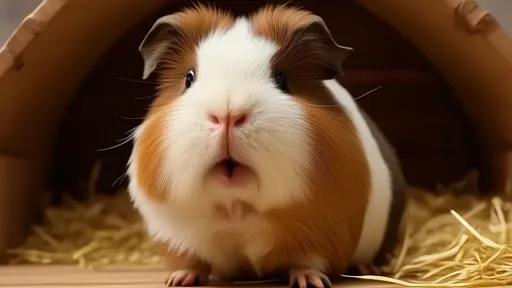
If you share your home with a guinea pig, you've likely been treated to a symphony of squeaks, rumbles, and chirps. These vocalizations are far more than random noise; they are a complex language through which these sociable rodents express their emotions, needs, and warnings. Learning to interpret the varied sounds of your guinea pig is one of the most rewarding aspects of pet ownership, allowing you to deepen your bond and better cater to their well-being.
Animal

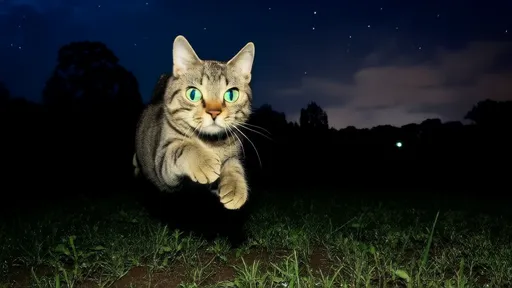
Why Does a Cat Run Around at Night? The Awakening of a Nocturnal Animal's Instinct

By /Sep 10, 2025

If you share your home with a feline friend, you are likely no stranger to the phenomenon known as the "midnight crazies." Just as you are drifting into a deep and peaceful slumber, a thunder of tiny paws erupts overhead. Your cat, seemingly possessed by a sudden and frantic energy, tears through the house at breakneck speed, leaping from furniture to bookshelf to the top of the refrigerator, often accompanied by the occasional chirp or yowl. While this 2 a.m. Grand Prix might be a baffling and sleep-disrupting mystery to us, to our cats, it is simply a natural expression of their fundamental, hardwired nature as crepuscular predators.
Animal

Do Dogs Twitch in Their Sleep? What Are They Dreaming About?

By /Sep 10, 2025

Have you ever watched your dog sleep and noticed its paws twitching, its whiskers quivering, or even soft barks escaping its mouth? It’s a common and often endearing sight for pet owners, sparking curiosity about what might be unfolding in the minds of our canine companions during these moments. The phenomenon of dogs twitching, paddling, or vocalizing in their sleep isn’t just random muscle activity—it’s a window into the complex world of canine dreams.
Animal

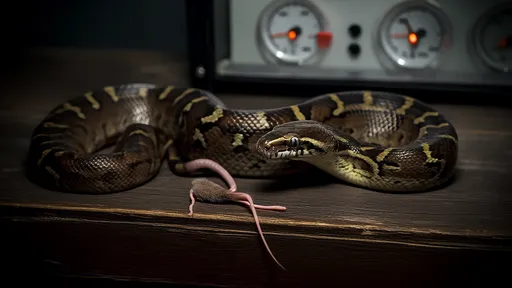
Why Do Pet Snakes Refuse to Eat? Temperature, Environment, or Disease?

By /Sep 10, 2025

Snake ownership brings a unique set of challenges, and one of the most common and concerning issues keepers face is a sudden or prolonged refusal to eat. A snake pushing away its meal can be a source of significant anxiety for its owner, prompting a frantic search for answers. The reasons behind this behavior are rarely simple and often interwoven, typically falling into three primary categories: environmental factors, such as temperature and habitat setup; the snake's natural biological rhythms; and underlying health problems. Discerning the exact cause requires a methodical, patient, and observant approach, as the solution for one cause could be ineffective or even detrimental for another.
Animal

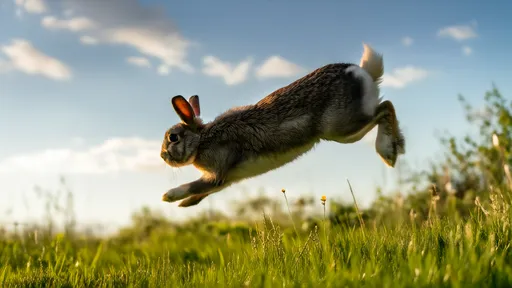
Why Do Rabbits Suddenly Fluff Up and Jump? Moments of Joyful Madness

By /Sep 10, 2025

In the quiet hush of a meadow or the cozy corner of a home, a rabbit might be sitting peacefully one moment, and the next, it explodes into a frenzy of leaps, twists, and dashes. This behavior, often called a "binky," is one of the most joyful and puzzling displays in the animal kingdom. To the untrained eye, it might seem like a random burst of energy, but for those who understand rabbits, it's a clear sign of pure, unadulterated happiness. The sudden eruption of movement—ears flopping, body twisting mid-air, and legs kicking out—is a rabbit's way of expressing delight and contentment, a physical manifestation of its emotional state.
Animal

Totoro's Unique Hair Care Secret: Bathing in Volcanic Ash

By /Sep 10, 2025

In the lush, high-altitude forests of the Andes Mountains, a small, furry creature engages in a grooming ritual that has fascinated naturalists for centuries. The chinchilla, often affectionately called the "mountain rabbit" or known by its popular culture nickname "dragon cat," does not bathe in water like many mammals. Instead, it rolls and writhes in fine, powdery volcanic ash, a behavior that is not merely quirky but essential to its survival. This unique practice, evolved over millennia, holds secrets to impeccable fur maintenance that even the beauty industry has taken note of.
Animal

Parrots Mimicking Speech: Do They Really Understand What They're Saying?

By /Sep 10, 2025

For centuries, the uncanny ability of parrots to mimic human speech has captivated and mystified us. From pirate tales to pet shops, these colorful birds have long been associated with the playful, if somewhat mindless, repetition of words and phrases. The classic image is of a bird squawking "Polly wants a cracker!" with no deeper comprehension of the request. This has led to the common perception that parrots are mere feathered recording devices, brilliantly programmed for sound but devoid of understanding. The phrase "parroting" itself has entered our lexicon as a synonym for mindless repetition. But is this centuries-old assumption actually true? A growing body of scientific research suggests we have profoundly underestimated the avian brain, forcing us to re-examine the age-old question: Do parrots truly understand what they are saying?
Animal

Hamsters Stuff Their Cheeks with Food: Their Portable Granaries

By /Sep 10, 2025

In the quiet corners of many homes, a small creature engages in one of nature's most endearing and practical behaviors: the hamster, with its adorably distended cheeks, becomes a living, breathing pantry. These tiny rodents, often no larger than the palm of a hand, possess an extraordinary ability to transport food in quantities that seem to defy their size. Their cheek pouches, stretching from mouth to shoulders, serve as mobile storage units, allowing them to gather and hoard sustenance with remarkable efficiency. This behavior is not merely a quirky trait but a critical survival mechanism honed by evolution, reflecting the harsh realities of their natural habitats where resources are scarce and competition is fierce.
Animal

Is Cat Kneading a Habit Developed from Childhood or a Sign of Seeing You as Mom?

By /Sep 10, 2025

There is something deeply comforting about the rhythmic motion of a cat kneading against a soft blanket or even your lap. This behavior, often referred to as "making biscuits" or "kneading," is a common feline activity that many cat owners observe with affection and curiosity. But what lies behind this seemingly simple action? Is it a habit formed in kittenhood, or is it a sign that your cat sees you as its mother? The answers are woven into the complex tapestry of feline instincts, early development, and social bonding.
Animal

Is the Dog's Head Tilt Really a Cute Gesture? An Attempt at Coordinating Auditory and Visual Perception"

By /Sep 10, 2025

If you've ever spent time around dogs, you've likely witnessed the classic head tilt—that adorable, quizzical cock of the head that seems to say, "I'm listening" or "I'm trying to understand." Often dubbed the "head tilt" or "canine head cock," this behavior is so endearing that it's frequently interpreted as a deliberate attempt to be cute, hence the term "head tilt kill" in Chinese pop culture. But is this charming gesture truly a calculated display of canine charm, or is there more beneath the surface? As it turns out, science suggests that the head tilt is far from mere theatrics; it's a complex behavior rooted in sensory processing, communication, and cognitive function.
Animal

The Bee's 8-Figure Dance: How Dance Language Guides the Direction of Nectar Sources

By /Sep 10, 2025

In the intricate world of honeybees, communication transcends simple signals and enters the realm of sophisticated dance. Among the most fascinating behaviors observed in apian societies is the famed "waggle dance," often referred to as the figure-eight dance due to its distinctive pattern. This dance is not merely a random display but a precise method through which forager bees convey critical information about the location of rich food sources to their hive mates. The discovery of this behavior, largely credited to Nobel laureate Karl von Frisch, unveiled a complex language that operates on principles of angle, duration, and vigor, enabling the colony to thrive through collective effort.
Animal

Owl's Asymmetrical Ears: The Evolutionary Marvel for Precise Prey Location

By /Sep 10, 2025

In the quiet of the night, as most creatures retreat to the safety of their nests, the owl takes to the skies. Its flight is silent, a whisper on the wind, and its eyes pierce the darkness with an almost supernatural clarity. But perhaps the most remarkable of the owl’s adaptations lies not in its wings or its eyes, but in something far more subtle: its ears. Unlike any other bird, many species of owl possess ears that are asymmetrical—one ear opening higher than the other, often differing in size and shape as well. This peculiar feature is no evolutionary accident; it is a masterpiece of biological engineering, allowing the owl to pinpoint the exact location of its prey with astonishing precision, even in complete darkness.
Animal

Penguin Stone Theft: The Real Estate Battle in the Animal Kingdom

By /Sep 10, 2025

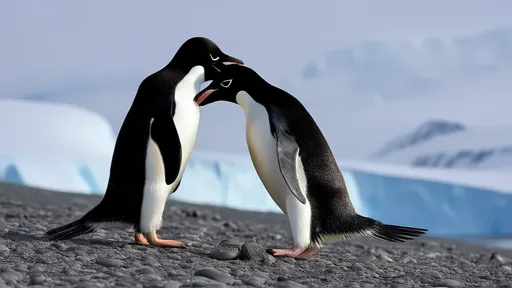
In the vast and icy landscapes of Antarctica, a peculiar real estate drama unfolds, one that involves tuxedo-clad residents with a penchant for property theft. Penguins, those beloved icons of resilience in the harsh polar environment, engage in a behavior that might seem charmingly mischievous at first glance but reveals a deeper struggle for survival and reproductive success: the pilfering of stones from each other’s nests.
Animal

How Do Hedgehogs Mate? The Sweet Trouble of Being Covered in Spines

By /Sep 10, 2025

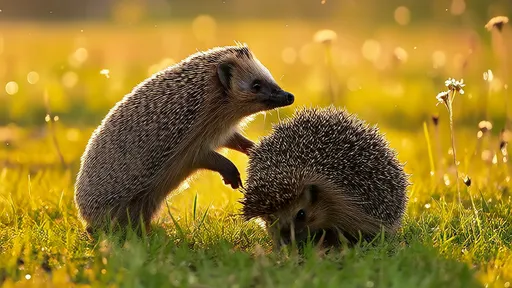
In the quiet, moonlit corners of gardens and forests, a peculiar and delicate dance unfolds. It is the dance of the hedgehog, a creature whose very anatomy seems to defy the possibility of intimacy. How do these spiny mammals, adorned with a formidable coat of sharp quills, manage to come together in the act of procreation? The answer is a fascinating tale of evolution, patience, and an almost poetic negotiation between two prickly partners.
Animal

Why Do Rabbits Hop High? The Ultimate Expression of Joy

By /Sep 10, 2025

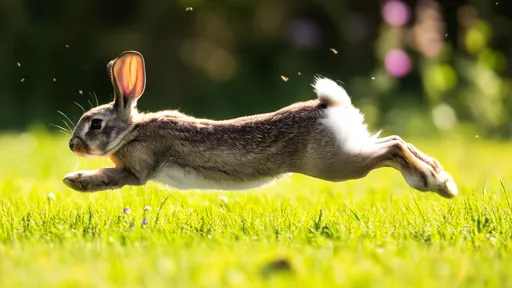
In the quiet moments of dawn or the fading light of dusk, if you are fortunate enough to witness a rabbit in its element, you may be treated to one of nature’s most delightful displays: the sudden, explosive leap known as a "binky." This isn’t merely a hop or a skip; it’s a full-bodied, acrobatic burst of motion—a twist, a kick, a mid-air jig that defies gravity and logic. To the casual observer, it might seem like a random spasm or a fit of energy, but to those who understand the language of lagomorphs, it is something far more profound: the pure, unadulterated expression of joy.
Animal

Turtles Breathe with Their Butts? The Unique Respiratory Function of the Cloaca

By /Sep 10, 2025

In the vast tapestry of the animal kingdom, few adaptations are as peculiar and fascinating as the ability of certain turtle species to breathe through their rear ends. This biological marvel, scientifically known as cloacal respiration, challenges conventional understanding of respiratory systems and showcases evolution’s boundless creativity. While most animals rely on lungs, gills, or skin for gas exchange, some turtles have turned their cloaca—a multifunctional orifice—into a secondary breathing apparatus. This phenomenon isn’t just a quirky footnote in biology; it’s a critical survival strategy that allows these creatures to thrive in environments where oxygen is scarce.
Animal

Multiple Ways Birds Bathe: Water Baths, Sand Baths, and Ant Baths

By /Sep 10, 2025

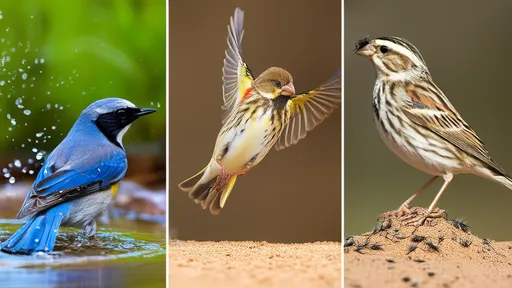
Birds are among nature's most fascinating creatures, not only for their ability to fly but also for their intricate and diverse grooming habits. While many of us are familiar with the sight of a bird splashing in a puddle or birdbath, fewer realize that bathing is a critical part of avian life, serving purposes far beyond mere cleanliness. From water baths to dust baths and even the peculiar practice of anting, birds employ a variety of methods to maintain their plumage, health, and overall well-being. These rituals are as varied as the species themselves, each adapted to their environment, physiology, and unique challenges.
Animal

How Do Squirrels Remember Thousands of Food Storage Locations? Experts on Memory Palaces

By /Sep 10, 2025

In the quiet corners of forests and urban parks, a remarkable cognitive feat unfolds each autumn as squirrels meticulously bury thousands of nuts and seeds. For centuries, observers assumed these scatter-hoarding rodents simply relied on luck or scent to recover their winter stash. Modern research, however, reveals a far more sophisticated system—one that rivals the memory techniques championed by ancient scholars and mental athletes. The humble squirrel, it turns out, is a natural master of the method of loci, commonly known as the memory palace technique.
Animal

Why Do Cats Like to Crawl into Boxes? The Scientific Explanation Behind the Sense of Security

By /Sep 10, 2025

Anyone who has shared their home with a feline friend has witnessed the peculiar yet universal phenomenon: a cat’s irresistible attraction to boxes. A new Amazon delivery arrives, and before the contents are even unpacked, the resident cat has already claimed the cardboard container as its own. This behavior transcends breed, age, and environment, from pampered house pets to cats in shelter facilities. While it often appears as a simple, quirky habit, the underlying reasons are deeply rooted in feline psychology, evolutionary biology, and fundamental needs for security and survival. The humble cardboard box is far more than a toy; for a cat, it is a fortress, a strategic observatory, and a sanctuary of comfort.
Animal

Why Do Dogs Circle Before Pooping? A Navigational Behavior Left by Ancestors

By /Sep 10, 2025

Have you ever watched your dog intently circle a spot before finally settling down to do its business? This seemingly quirky pre-potty ritual is far from random. It's a deeply ingrained behavior passed down through generations, a canine compass calibration of sorts that connects our domesticated companions to their wild ancestors.