In the quiet corners of modern veterinary clinics, an ancient practice is experiencing a remarkable renaissance. Traditional Chinese Veterinary Medicine, or TCVM, is not merely an alternative approach but a comprehensive medical system with a history stretching back thousands of years. Its philosophy is deeply rooted in the same principles that guide human Traditional Chinese Medicine, viewing the animal body as a complex, interconnected system where balance is the cornerstone of health. This holistic perspective stands in stark contrast to the often compartmentalized view of Western medicine, offering a different lens through which to understand and treat our animal companions.
At the heart of TCVM lies the concept of Qi, the vital life force that flows through all living beings. This energy is believed to travel along specific pathways in the body known as meridians. Health, in this system, is a state of harmonious Qi flow and a balance between the opposing yet complementary forces of Yin and Yang, as well as the five elements—Wood, Fire, Earth, Metal, and Water. Disease and discomfort arise from blockages, deficiencies, or excesses in this flow, creating an imbalance. A TCVM practitioner’s role is to act as a detective, identifying the root cause of the imbalance rather than simply suppressing the symptoms, aiming to restore the body’s innate ability to heal itself.
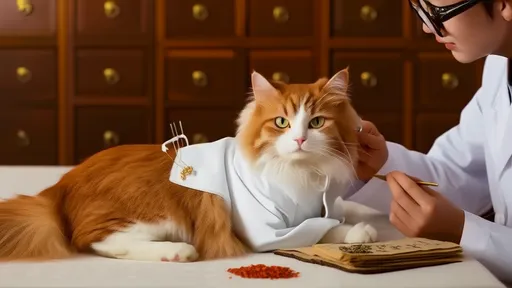
Among the most intriguing and widely recognized modalities within TCVM is acupuncture. The image of a pet calmly covered in fine needles often surprises those unfamiliar with the practice. Far from being a painful experience, acupuncture is typically well-tolerated by animals, many of whom become noticeably relaxed during sessions. The insertion of hair-thin, sterile needles at specific acupuncture points serves as a catalyst for the body’s own healing mechanisms. These points are precise locations on the meridians where Qi can be accessed and influenced.
The physiological effects of this ancient technique are now finding explanations in modern science. The insertion of needles stimulates the nervous system, triggering the release of endorphins, the body's natural painkillers, and other neurotransmitters. It enhances blood circulation, reduces inflammation, and modulates immune responses. This makes it exceptionally effective for a wide range of conditions, particularly those that challenge conventional Western treatments. It is frequently sought for managing chronic pain from arthritis or hip dysplasia, aiding neurological recovery, alleviating allergies and skin problems, and even supporting animals with kidney disease or cancer by improving their quality of life and mitigating the side effects of conventional treatments like chemotherapy.
While acupuncture addresses the flow of energy, Chinese herbal medicine works from within to nourish and correct deeper imbalances. This is not a simple collection of plants but a sophisticated pharmacy of natural substances, including roots, bark, flowers, and minerals, often combined into complex formulas. These formulas are crafted based on the individual patient’s pattern diagnosis—whether it is a deficiency of Qi, an invasion of dampness, or liver stagnation—and are designed to work synergistically, with each herb playing a specific role in the overall therapeutic goal.
The artistry of herbal medicine lies in these custom formulations. A practitioner does not simply prescribe for a disease label like "canine arthritis"; they prescribe for the specific pattern presentation, which could be "Kidney Yang Deficiency with Qi Stagnation" in one dog and "Blood Stasis with Dampness" in another. The formulas would be entirely different. Herbs are powerful, and their use is a serious undertaking. Safety is paramount, requiring rigorous processing, precise dosing based on the animal’s weight and condition, and a deep understanding of herb-herb and herb-drug interactions to avoid any conflicts with existing medications.
The true power of TCVM is often realized when acupuncture and herbal medicine are woven together. Acupuncture can provide immediate relief and stimulate change, while herbs offer a sustained, foundational treatment that addresses the root imbalance over time. This integrated approach creates a powerful therapeutic duo. Furthermore, TCVM rarely exists in a vacuum. An integrative veterinarian might use acupuncture to manage a dog’s post-surgical pain effectively, reducing the need for pharmaceutical painkillers, while simultaneously using a herbal formula to support tissue repair and strength. This collaborative model, combining the best of Eastern and Western medicine, provides a comprehensive care plan that maximizes healing and minimizes potential side effects.
For a pet owner considering this path, the choice of a qualified practitioner is the most critical step. One should seek a licensed veterinarian who has undertaken extensive post-graduate certification in TCVM from a reputable institution. This ensures that the individual possesses a solid foundation in Western veterinary science and is expertly trained in the safe application of TCVM modalities. The initial consultation will be a deep dive into the pet’s entire life—diet, behavior, temperament, and complete medical history—allowing the practitioner to form a holistic pattern diagnosis and craft a truly individualized treatment strategy.
As we continue to seek gentler, more holistic ways to care for our beloved pets, Traditional Chinese Veterinary Medicine offers a time-tested and profound path to healing. It moves beyond treating isolated ailments to nurturing the whole animal—body, mind, and spirit. By restoring balance and harnessing the body’s own wisdom, TCVM empowers our pets to live not just longer lives, but fuller, more vibrant ones. It represents a beautiful partnership between ancient wisdom and modern care, all aimed at achieving one simple, universal goal: a happy, healthy companion.
By /Aug 20, 2025

By /Aug 20, 2025
By /Aug 20, 2025

By /Aug 20, 2025

By /Aug 20, 2025

By /Aug 20, 2025

By /Aug 20, 2025

By /Aug 20, 2025

By /Aug 20, 2025

By /Aug 20, 2025

By /Aug 20, 2025
By /Aug 20, 2025
By /Aug 20, 2025

By /Aug 20, 2025
By /Aug 20, 2025

By /Aug 20, 2025

By /Aug 20, 2025

By /Aug 20, 2025

By /Aug 20, 2025

By /Aug 20, 2025